
China’s Ethnic Unity Law Passes: A New Era of Control Over Ethnic Identity Begins
05/07/26
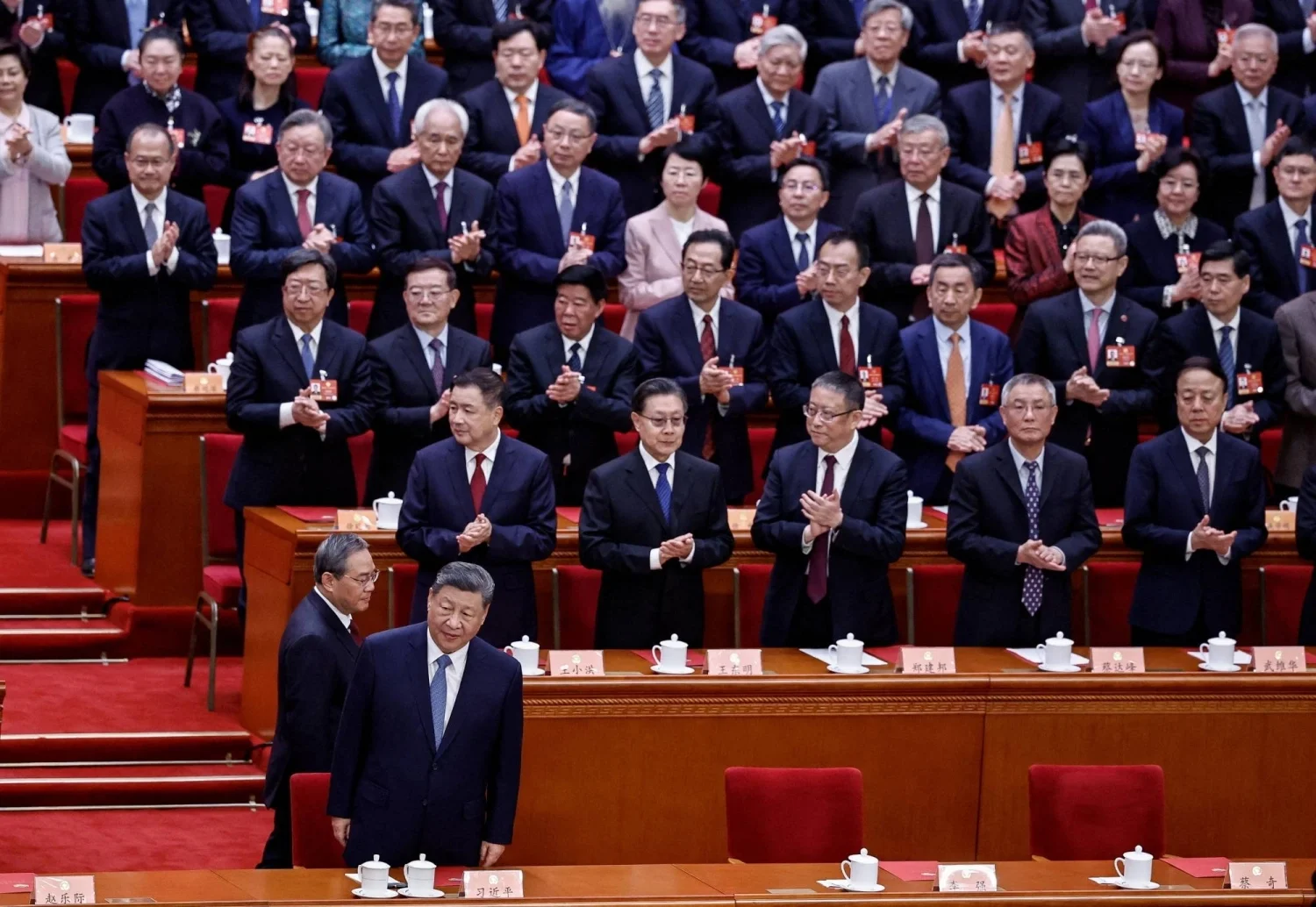
China's sweeping new Law on Promoting Ethnic Unity and Progress, signed into law just weeks ago and set to take effect on July 1, has sparked a wave of international condemnation and deep alarm among human rights advocates, legal scholars, and minority communities who say the legislation formalizes decades of repressive assimilation policies under the banner of national unity.
The law was adopted by China's National People's Congress on March 12, 2026, and signed by President Xi Jinping on the same day. It is slated to go into effect on July 1, 2026, and codifies Xi Jinping's policies regarding ethnic minorities and Sinicization.
The legislation mandates broad implementation of what the Chinese state calls a "strong sense of community of the Chinese nation" across government bodies, schools, enterprises, and social organizations. Mandarin Chinese is prioritized as the language of instruction and public life, effectively diminishing the official space for minority languages such as Uyghur and Tibetan.
Article 15 of the law mandates that Mandarin Chinese be taught to all children before kindergarten and throughout compulsory education until the end of high school. In public settings where Mandarin and minority languages are used together, Mandarin must be given "prominence in placement, order, and similar respects." Religious institutions, schools, and places of worship are also required to adhere to "the direction of the Sinicization of religion in China."
Under Article 20, parents and guardians are required to "educate and guide minors to love the Chinese Communist Party" and "establish the concept that all ethnic groups of the Chinese nation are one family," with explicit prohibitions on teaching minors "concepts detrimental to ethnic unity and progress."
While Beijing has presented the law as a step toward "common prosperity" and modernization, critics say it is the culmination of a long-running assimilation campaign. Critics say the measure formalizes a years-long assimilation drive affecting the 55 recognized minority groups in China, including Uyghurs, Tibetans, and Mongols. Han Chinese comprise approximately 90 percent of the population, while ethnic minorities account for roughly 10 percent.
The new law codifies a shift in Beijing's ethnic policy, moving away from the Mao-era approach of nominal ethnic autonomy modelled on the Soviet Union. While in practice the party-state has long maintained a firm and repressive grip over Tibetan, Uyghur, and other autonomous regions, the 1984 framework still recognized, at least on paper, distinct cultures, languages, religions, and ways of life, and provided for nominal autonomous governance and preferential treatment for ethnic groups.
The law would institutionalize assimilation by pushing Mandarin-language instruction for ethnic minority children beginning in preschool and embedding ideological education that prescribes a single, "correct" understanding of history, ethnicity, culture, and religion as defined by the Chinese Communist Party.
The implications for the roughly 12 million Uyghurs in the Xinjiang Uyghur Autonomous Region — already subject to what the U.S. government and several Western parliaments have described as genocide and crimes against humanity — are particularly alarming.
Since 2014, and especially after 2017, the CCP has detained more than 1 million Turkic Muslims — primarily Uyghurs, Kazakhs, and other groups — in internment camps without legal process under the pretext of counterterrorism and "reeducation." Reports and leaked data show that mass arbitrary detention, forced labor, family separation, surveillance, and severe curtailment of religious practice form the core of this system.
Turgunjan Alawdun, President of the World Uyghur Congress, warned that "paired with the Counter-Terrorism Law, which has served as the legal justification for the mass internment camp system launched in 2016, this new legislation will further deepen repression against Uyghurs."
Uyghur human rights lawyer Rayhan Asat, whose brother Ekpar Asat — a Uyghur entrepreneur — was sentenced to 15 years in prison after returning from a U.S. exchange program in 2016, argued that the measure must be read against the backdrop of what the U.S. government has described as genocide and crimes against humanity against Uyghurs in Xinjiang, and that the new law could give Chinese authorities a broader legal pretext to target minority communities.
The law's impact extends far beyond Xinjiang. The eight UN human rights experts who wrote to the Chinese government warned that in its national application, the law could "transform temporary or experimental regional measures into binding nationwide obligations" with serious implications. They called on China to ensure that Mandarin is not the only language of instruction, to secure access to instruction in mother tongues for Kazakhs, Tibetans, and Uyghurs, and to reverse the closure of schools providing instruction in minority languages.
When the government attempted to implement similar measures in Inner Mongolia in 2020, it sparked widespread protests and boycotts, ultimately resulting in the removal of local ethnic Mongolian officials who failed to strictly enforce Beijing's directives.
One of the most alarming provisions for the international community is the law's extraterritorial scope. The draft law explicitly allows authorities to hold "organizations and individuals outside the territory of the People's Republic of China" legally accountable for acts deemed to undermine national unity. Experts warn that this mirrors Beijing's ongoing transnational repression, which has included harassment of Chinese students abroad and threats to diaspora communities' families.
The international response has been swift. In a letter to the Chinese government dated April 16, 2026, eight UN human rights experts raised concerns that the law significantly restricts the exercise of a range of social and cultural rights in violation of the International Covenant on Economic, Social and Cultural Rights and the Convention on the Rights of the Child, both of which have been ratified by and are binding upon China.
The European Parliament passed a landmark resolution condemning the legislation with a strong majority of 439 votes, followed by a joint public hearing to assess the law's impact on Tibetans, Uyghurs, and other affected communities.
Secretaries of State Antony Blinken, Michael Pompeo, and Marco Rubio have each confirmed that the Chinese government has committed genocide and crimes against humanity against Uyghurs and other minorities in Xinjiang. Multiple national parliaments — including those of the United Kingdom, Belgium, Czechia, Lithuania, the Netherlands, and Canada — have also declared China's atrocities in the region to constitute genocide.
Chinese officials have consistently defended the legislation. Chinese authorities say the law promotes common prosperity, modernization, and lawful governance of ethnic affairs, and frame it as building a "strong sense of community for the Chinese nation." Anthropologists and analysts note that the law expands the legal basis to restrict religious, cultural, and political activities of ethnic minorities and could be used to criminalize dissent or cultural expression as separatism.
With the law taking effect on July 1, 2026, rights groups are calling on democratic governments to impose targeted sanctions, support diaspora communities, and press Beijing to allow independent UN monitors access to Xinjiang and Tibet. For millions of Uyghurs, Tibetans, Mongols, and members of China's other 52 recognized minority groups, the stakes could not be higher. As Uyghur activist Rushan Abbas put it: "The Chinese government loves to put Uyghurs, Tibetans, and other peoples in traditional costumes for its parliamentary sessions and state media broadcasts. It celebrates this as proof of a harmonious, diverse nation. But harmony is not what you call it when you demolish over 16,000 mosques."