
Doppa Day: Honoring The Uyghur Doppa And the Cultural Heritage
05/09/26
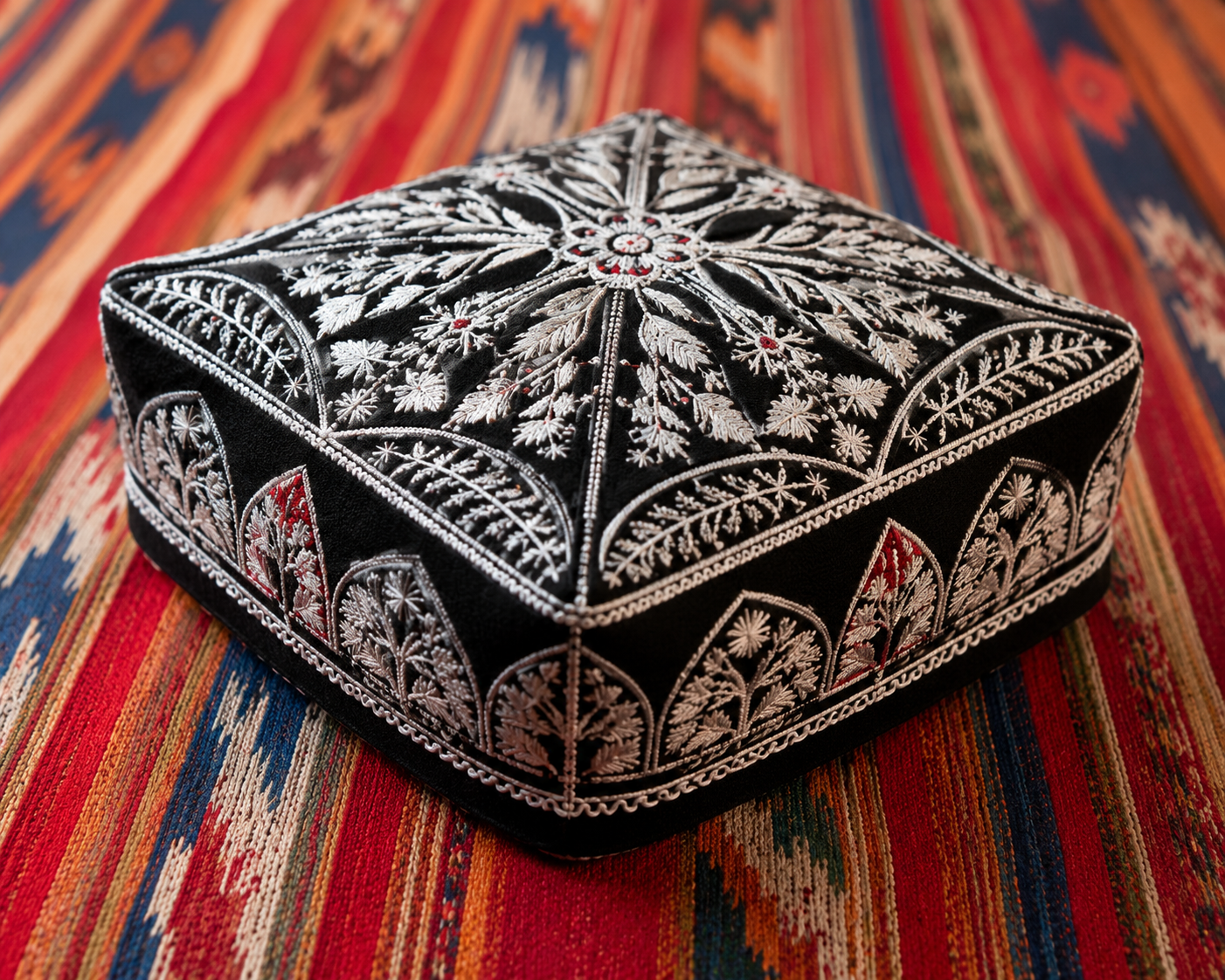
Every year on May 5th, Uyghur communities around the world celebrate Doppa Day, a cultural occasion dedicated to the traditional Uyghur hat known as the doppa. The day serves as an opportunity to honor Uyghur heritage, celebrate traditional craftsmanship, and strengthen cultural identity through one of the most recognizable symbols of Uyghur culture.
The doppa is one of the most important elements of traditional Uyghur clothing. Usually square-shaped with four distinct corners, the hat is carefully handcrafted and decorated with detailed embroidery. While many doppas are black with white stitching, there are many regional styles featuring colorful fabrics, floral patterns, geometric shapes, and symbolic designs. Each pattern often carries cultural meaning, representing nature, prosperity, protection, or local identity.
For centuries, the doppa has been worn during everyday life as well as at weddings, festivals, religious celebrations, and family gatherings. Men, women, and children all wear versions of the doppa, although styles may differ depending on region, age, and occasion. In many Uyghur families, the art of making doppas is passed down from generation to generation, helping preserve traditional embroidery techniques and artistic knowledge.
Beyond its appearance, the doppa carries deep cultural and emotional significance. It symbolizes dignity, respect, and a connection to Uyghur history and community values. Wearing a doppa is often seen as an expression of pride in one’s heritage and identity. For Uyghurs living outside their homeland, the doppa can also serve as a reminder of home, family traditions, and cultural continuity.
Doppa Day has become especially meaningful as communities work to preserve and promote Uyghur culture for future generations. On May 5th, people proudly wear doppas in schools, workplaces, public spaces, and community gatherings. Celebrations often include traditional Uyghur music and dance performances, cultural exhibitions, poetry readings, storytelling, and displays of handmade crafts. Social media also plays an important role, allowing Uyghurs across different countries to share photos, memories, and messages celebrating their culture.
The celebration is not only about traditional fashion; it is also about cultural preservation and education. Many people use Doppa Day as an opportunity to teach others about Uyghur history, language, and customs. Younger generations are encouraged to learn about their cultural roots and continue the traditions associated with the doppa and other aspects of Uyghur heritage.
The craftsmanship behind the doppa reflects the richness of Uyghur art and creativity. Handmade doppas require patience, precision, and skill, often involving detailed stitching and carefully selected fabrics. Some are designed for daily wear, while others are more decorative and reserved for important ceremonies and celebrations. The wide variety of styles found across different regions demonstrates the diversity and vibrancy of Uyghur culture.
Today, the doppa remains a powerful cultural symbol recognized around the world. Whether worn during celebrations or displayed as a treasured handmade item, it represents resilience, unity, and the enduring spirit of the Uyghur people. Doppa Day on May 5th reminds communities everywhere of the importance of protecting cultural traditions and celebrating the unique identities that enrich global society.
Through music, art, storytelling, and the simple act of wearing a traditional hat, Doppa Day continues to strengthen cultural bonds and keep Uyghur heritage alive for future generations.